WNBA Players Will Never Earn What NBA Players Make — And It’s Not Sexism
WNBA players demand equal pay. The math says no. Here’s why the pay gap between the NBA and WNBA has nothing to do with gender — and everything to do with economics that women refuse to accept.

WNBA players demand equal pay. The math says no. Here’s why the pay gap between the NBA and WNBA has nothing to do with gender — and everything to do with economics that women refuse to accept.
Every year, the same debate surfaces: WNBA players deserve to be paid like NBA players. It’s framed as a gender equality issue — another example of women being undervalued in a male-dominated world.
It’s not. It’s a revenue issue. And revenue doesn’t care about your feelings.
The NBA generates approximately $10 billion in annual revenue. The WNBA generates approximately $200 million. That’s a 50:1 ratio.
The average NBA salary is roughly $9.7 million per year. The average WNBA salary is roughly $120,000. That’s an 80:1 ratio — which means WNBA players are actually overpaid relative to the revenue they generate compared to NBA players.
Read that again. WNBA players receive a higher percentage of league revenue than NBA players do. The “pay gap” isn’t underpayment. It’s a revenue gap. And no amount of activism changes arithmetic.
Why the Revenue Gap Exists
Viewership. The 2024 NBA Finals averaged 11.3 million viewers. The 2024 WNBA Finals averaged 1.6 million. That’s a 7:1 ratio. Advertisers pay based on eyeballs. Fewer eyeballs = less ad revenue = less money to distribute.
Attendance. NBA arenas average 17,000-20,000 fans per game. WNBA arenas average 6,000-8,000. Ticket revenue is directly proportional to attendance.
Merchandise. NBA merchandise is a multi-billion dollar global business. WNBA merchandise is a fraction of that. People buy what they want to watch — and the market has spoken clearly.
Global appeal. The NBA is a worldwide brand — massive followings in China, Europe, Africa, and South America. The WNBA’s international footprint is negligible by comparison.
These aren’t opinions. They’re market outcomes. The NBA generates more revenue because more people want to watch it. And more people want to watch it because — and this is the part nobody wants to say — the product is more entertaining.
The Entertainment Gap Nobody Will Discuss
The NBA features athletes who can dunk from the free throw line, throw passes behind their backs at full speed, and perform athletic feats that defy physics. It’s a spectacle. People pay for spectacles.
The WNBA features skilled, talented athletes playing fundamentally sound basketball. But the athleticism gap between the NBA and WNBA is enormous — and athleticism is what sells tickets, jerseys, and TV deals.
The average NBA player is 6’6”, 215 lbs, with a vertical leap over 35 inches. The average WNBA player is 5’11”, 170 lbs, with a vertical leap around 19 inches. These aren’t cultural differences. They’re biological ones — the same differences that explain every other physical performance gap between men and women.
This isn’t a judgment on WNBA players’ skill. Many WNBA players have superior fundamentals, basketball IQ, and shooting mechanics compared to NBA players. But fundamentals don’t sell out arenas. Athleticism does. Dunks do. Highlight plays do. And the biological gap in explosive athleticism between men and women cannot be closed by training, funding, or cultural support.
The Caitlin Clark Effect Proves the Point
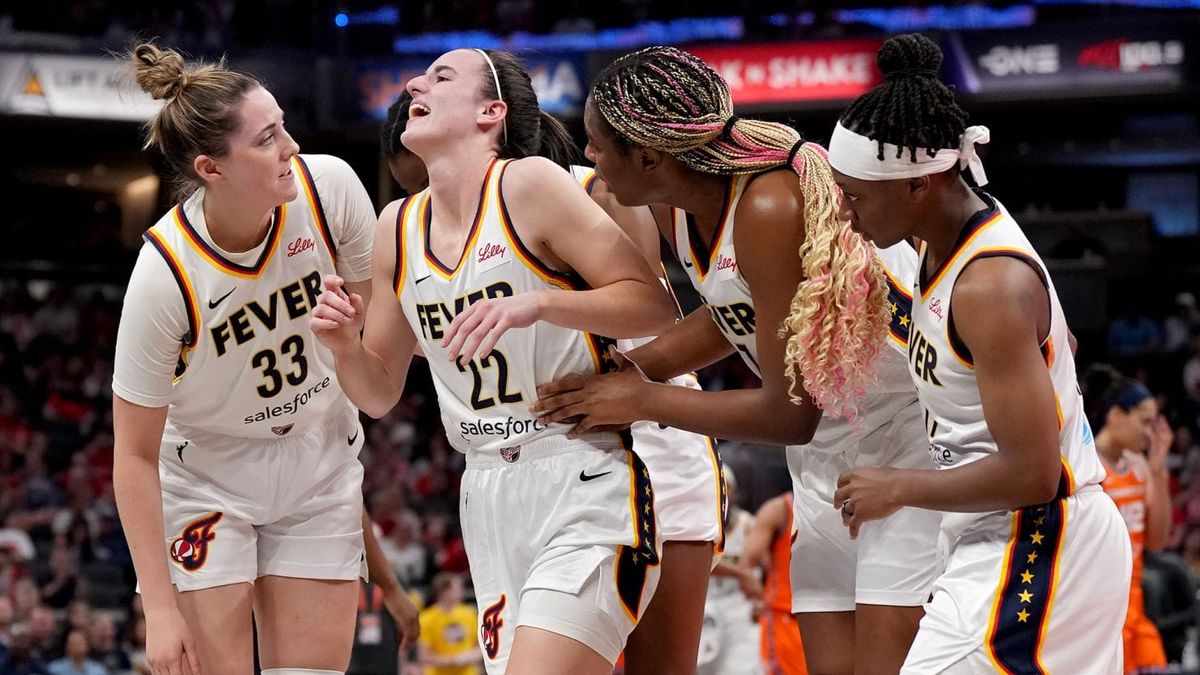
Caitlin Clark’s entry into the WNBA generated unprecedented attention — TV ratings spiked, attendance jumped, merchandise sales surged. The league had its best viewership numbers in over two decades.
But here’s what that proves: the WNBA’s revenue problem isn’t sexism. It’s marketing and entertainment value. When the product becomes compelling enough — through a generational talent, storylines, and cultural momentum — people watch. And when people watch, revenue follows.
Clark didn’t get equal pay to Steph Curry. But her impact on WNBA revenue is moving the league toward a reality where future stars can earn more — through the same mechanism that created NBA salaries: market demand.
That’s how capitalism works. You don’t demand a higher salary because you “deserve” it. You earn it by generating revenue that justifies it. And right now, the WNBA doesn’t generate the revenue to justify NBA-level salaries. Period.
The Real Equality Argument
True equality isn’t “pay women the same as men regardless of revenue.” True equality is “pay everyone proportional to the value they generate.”
By that standard, WNBA players are fairly compensated — arguably overcompensated relative to revenue.
If WNBA players want NBA salaries, the path is clear: generate NBA revenue. Grow the audience. Increase viewership. Sell more merchandise. Expand globally. Create a product that commands premium pricing.
Caitlin Clark showed it’s possible. But it requires the market to decide — not activists, not politicians, and not guilt-tripped corporations writing sponsorship checks to signal virtue.
The WNBA pay gap isn’t sexism. It’s supply and demand. And until the demand matches the ask, the pay won’t either.
Should WNBA players earn what NBA players make? Or is the revenue argument settled? Take it to the comments.