Why Women Hate Being Alone More Than Men
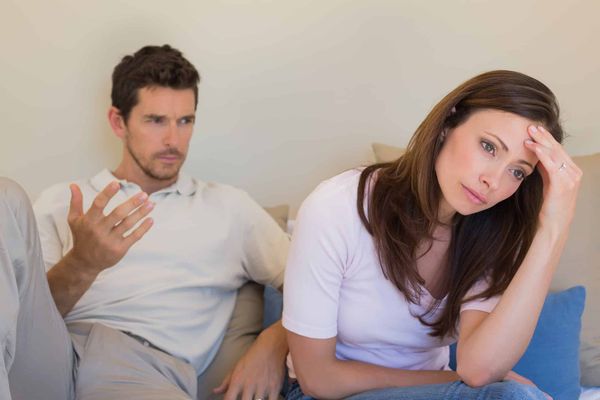
He’s single and thriving. She’s single and spiraling. Same relationship status, completely different experience. Here’s why solitude feels like freedom to men and punishment to women — and why the difference is destroying modern dating.

He’s single and thriving. She’s single and spiraling. Same relationship status, completely different experience. Here’s why solitude feels like freedom to men and punishment to women — and why the difference is destroying modern dating.
He’s been single for two years. He’s in the best shape of his life. His career is accelerating. His apartment is exactly how he wants it. His weekends belong to him. He’s not lonely — he’s at peace.
She’s been single for six months. She’s already downloaded three dating apps, called her therapist twice, and told her friends she’s “so over it” while swiping furiously under the table at brunch. She’s not at peace — she’s in withdrawal.
Same circumstance. Opposite experience. And the difference isn’t strength or weakness. It’s biology, psychology, and a set of social dependencies that women have never been forced to examine — because the culture made sure they never had to be alone long enough to confront them.
Women hate being alone more than men. Not all women. Not in every case. But consistently, measurably, and for reasons that go far deeper than “women are more emotional.”
The Biological Wiring
Female psychology is wired for connection at a level that male psychology isn’t — and the wiring makes solitude feel fundamentally different for each gender.
Oxytocin dependency. Women’s brains produce and respond to oxytocin — the bonding hormone — at significantly higher levels than men. This creates a neurochemical need for physical touch, emotional intimacy, and relational connection that, when unmet, registers as genuine distress. A woman without intimate connection doesn’t just feel lonely. She feels physiologically deprived — like hunger, but for bonding.
Men produce oxytocin too, but at lower levels and with less dependency on consistent relational input. A man can go weeks without deep emotional connection and feel fine. A woman going the same period without it feels increasingly anxious, sad, and unmoored. The difference isn’t cultural. It’s chemical.
Estrogen amplifies social need. Estrogen — the dominant female sex hormone — enhances social cognition, emotional processing, and the drive for interpersonal connection. Women’s brains are literally structured to prioritize social bonds — more neural pathways connecting emotional and verbal centers, greater sensitivity to social cues, stronger memory for relational interactions.
This architecture makes connection feel essential rather than optional. A man can compartmentalize his social needs — meeting them through brief, activity-based interactions. A woman’s social needs are more pervasive, more constant, and more difficult to satisfy with casual engagement.
Evolutionary survival strategy. In ancestral environments, a woman alone was a woman in danger. Female survival depended on social integration — the tribe provided protection, resources, childcare support, and physical safety that a solitary woman couldn’t secure independently. The fear of isolation isn’t irrational. It’s an ancient alarm system that once meant the difference between life and death.
Men’s ancestral survival was less dependent on social integration. A solitary male could hunt, build shelter, and defend himself. Isolation was uncomfortable but not life-threatening. The male nervous system reflects this — solitude registers as neutral, not dangerous.
The Identity Crisis of Singleness
For many women, being single isn’t just a relationship status. It’s an identity crisis.
Her social identity is relationally defined. Culture defines women through their relationships — daughter, girlfriend, wife, mother. Each label comes with social status, community access, and a sense of purpose. A woman without a relational label feels undefined — not because she lacks individual identity, but because the culture never taught her to build one independent of relationships.
A man’s social identity is achievement-defined — his career, his skills, his accomplishments. Being single doesn’t threaten these. A single man is still a man with a career and a purpose. A single woman — in her own perception and often in society’s — is incomplete. Not because she IS incomplete. But because the identity framework she was given has a relationship-shaped hole in it.
Her timeline is externally imposed. The biological clock, the social expectation to be “settled” by a certain age, the friend group that’s pairing off, the family that asks “anyone special?” at every gathering — women face a timeline pressure around singleness that men simply don’t. A man single at 34 is “focused on his career.” A woman single at 34 is “running out of time.” Same age. Same status. Different cultural interpretation.
This timeline pressure transforms singleness from a neutral state into a ticking clock — every month alone isn’t just a month without a partner. It’s a month closer to a deadline that society and biology both enforce.
Her self-worth is externally sourced. Despite decades of “you don’t need a man to be happy” messaging, many women’s self-worth remains significantly tied to whether they’re chosen by a romantic partner. The validation of being desired, being committed to, being someone’s “person” — this isn’t a superficial want. For many women, it’s the primary source of self-esteem.
A man’s self-worth is more internally generated — through accomplishment, competence, physical capability, and peer respect. These sources don’t require a romantic partner. A woman whose primary self-worth source is relational validation experiences singleness as a direct threat to her self-esteem — not just her social life.
Why Men Handle Solitude Better
Men aren’t emotionally superior. They’re structurally different in ways that make solitude more tolerable.
Men bond through activity, not intimacy. A man can meet his social needs through a gym session, a pickup basketball game, a work lunch, or a video game session with friends. These interactions don’t require emotional disclosure, vulnerability, or deep conversation. They’re efficient — social needs met in minimal time with minimal emotional investment.
Women’s social needs require more depth — long conversations, emotional processing, vulnerability exchanges, quality time. These needs can’t be met through casual interactions. They require dedicated relationships with people who are emotionally available and consistently present. When those relationships are absent, the deficit is acute.
Men have a higher tolerance for emotional neutrality. Men are comfortable in emotional neutral — the state of not feeling strongly positive or negative. This isn’t emotional suppression. It’s a genuine baseline where the absence of strong emotion doesn’t register as a problem.
Women’s emotional baseline is more variable — they experience higher highs and lower lows. The absence of positive relational input (love, intimacy, connection) doesn’t settle into neutral. It tips toward negative. Being alone doesn’t feel “okay” — it feels like something is missing.
Men’s hobbies are genuinely fulfilling. This sounds trivial but it’s significant. Men derive genuine satisfaction from solo activities — working out, building things, gaming, watching sports, tinkering with projects. These activities fill time and produce real dopamine rewards.
Women’s hobbies are more frequently social — shopping with friends, group fitness, brunch, book clubs, wine nights. When the social component is removed, the activity loses its appeal. A man can lift weights alone for two hours and feel great. A woman at brunch alone feels conspicuous, pitied, and uncomfortable.
Men’s identity is less threatened by singleness. A man who’s single can still answer “what do you do?” with confidence — his identity is his career, his skills, his achievements. A woman who’s single often feels like she’s answering an unasked follow-up question: “And why is no one with you?”
The Coping Mechanisms That Make It Worse
Women who hate being alone develop coping mechanisms that perpetuate the cycle rather than breaking it.
Serial dating. She can’t tolerate the gap between relationships, so she fills it immediately — jumping from one partner to the next without processing the previous relationship. Each new man is a bandage over the wound of singleness rather than a genuine connection built from a place of wholeness.
Situationships as filler. She accepts a situationship — undefined, uncommitted, going nowhere — because having SOMETHING feels better than having nothing. The situationship doesn’t meet her relational needs. But it prevents the full confrontation with solitude that might actually force growth.
Social media as substitute. She curates an online social life that masks the offline loneliness. The Instagram stories, the group chat engagement, the TikTok comments — all create the feeling of connection without its substance. The phone becomes a pacifier that soothes the anxiety of being alone without addressing its cause.
Lowering standards out of desperation. The woman who hates being alone eventually accepts partners she wouldn’t have considered from a position of strength. She’s not choosing him. She’s choosing not-alone. The relationship is built on her fear rather than her desire — and it shows in every interaction.
Over-reliance on friends. Her friendships become her emotional life support system — carrying the weight that a romantic partner would normally share. This overburdens the friendships, creates codependency, and often drives friends away — which increases the loneliness she was trying to avoid.
What She Needs to Learn
Being alone is a skill. Like any skill, it’s uncomfortable at first and becomes easier with practice. The woman who never learns to be alone never develops the internal resources that make her a good partner — because she’s always outsourcing her emotional needs to whoever’s available rather than learning to meet them herself.
Solitude reveals who you are. The woman who can’t be alone can’t hear herself. Her identity is always shaped by whoever she’s with. Her opinions, her interests, her mood, her self-image — all calibrated to the current partner rather than generated internally. Solitude strips away the external inputs and forces her to confront who she is without a mirror reflecting someone else’s perception.
Desperation is the worst dating strategy. The woman who dates from a place of fear — fear of being alone, fear of the timeline, fear of being unchosen — makes consistently bad decisions. She ignores red flags. She accepts less than she deserves. She commits too fast. She tolerates treatment that a woman dating from abundance would never accept.
The best relationships start from wholeness. A woman who’s complete alone brings completeness to a partnership. A woman who’s incomplete alone brings neediness — which repels the high-quality men she wants and attracts the low-quality men who exploit dependency.
Men find self-sufficient women more attractive. The woman who’s genuinely comfortable alone — not performing comfort, but actually content with her own company — radiates a confidence that’s magnetic. She’s choosing to be with him, not needing to be. And that choice is the foundation of genuine attraction.
The Bottom Line
Women hate being alone more than men because biology wired them for connection, culture defined them through relationships, and nobody taught them that solitude is a skill worth developing.
The woman who learns to be alone — genuinely, peacefully, productively alone — becomes the most powerful version of herself. Not because she doesn’t want a partner. But because she doesn’t NEED one. And the difference between wanting and needing is the difference between choosing well and settling desperately.
He’s single and thriving because solitude is his natural habitat. She’s single and suffering because nobody ever told her it could be hers too.
It can. But she has to stop running from it long enough to discover that.
Why do women struggle with being alone? Is it biology or conditioning? The comments are open.