Why Do Women Lose Attraction the Moment You Show Weakness?
He didn’t cry. He didn’t break down. He just admitted he was scared — about his career, about money, about the future. That was enough. She looked at him differently after that conversation. Not with contempt. With something worse — pity. And pity is where attraction goes to die.

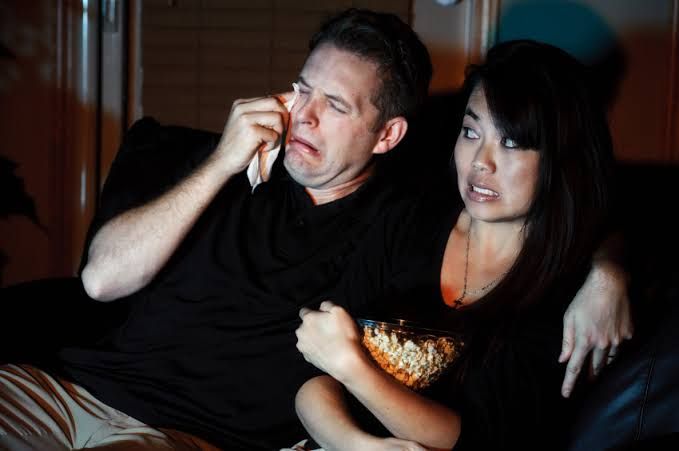
He didn’t cry. He didn’t break down. He just admitted he was scared — about his career, about money, about the future. That was enough. She looked at him differently after that conversation. Not with contempt. With something worse — pity. And pity is where attraction goes to die.
He didn’t do anything dramatic.
He came home after a brutal week at work. The project he’d been leading for six months was falling apart. His boss was threatening restructuring. His confidence — the quiet, steady kind she’d always admired — was cracked. Not shattered. Cracked.
He sat on the couch and said something he’d never said before: “I don’t know if I can handle this.”
Seven words. No tears. No breakdown. No dramatic display. Just seven honest words from a man who trusted her enough to say them.
She held his hand. She told him everything would be okay. She was supportive, warm, present.
And something in her shifted. Not that night. Not that week. But over the following month, the way she looked at him changed. The way she touched him changed. The way she initiated — or didn’t initiate — changed. The man she’d been attracted to before those seven words became someone slightly different after them.
He didn’t show weakness. He showed humanity. And her attraction system couldn’t tell the difference.
The Spectrum of “Weakness” That Kills Attraction
The previous article covered crying specifically. This goes deeper — because crying is only the most visible form of male vulnerability that triggers the attraction death response. The spectrum is much wider than most men realize.
Admitting fear. “I’m scared” — about finances, career, health, the future. Any expression of fear from a man registers in her limbic system as uncertainty about his ability to protect and provide. She doesn’t think “he’s being honest.” Her subconscious thinks “he might not be able to handle what’s coming.”
Expressing self-doubt. “I don’t know if I’m good enough.” “Maybe I’m not cut out for this.” “What if I fail?” Self-doubt from a woman triggers male protective instincts. Self-doubt from a man triggers female reassessment. She starts evaluating whether his doubt is temporary or permanent — whether the man she chose is still the man she thought he was.
Asking for reassurance. “Do you still love me?” “Are you still attracted to me?” “Am I enough for you?” Each question communicates insecurity — and insecurity is the most corrosive force in male attractiveness. The man who needs her reassurance is the man who doesn’t trust his own value. And if HE doesn’t trust it, why should she?
Revealing financial stress. “I’m worried about money.” “We might need to cut back.” “I’m not sure I can afford that.” Financial vulnerability hits the provider identity directly — and the provider identity is foundational to male attractiveness in most women’s evaluation framework. Financial stress doesn’t just threaten the lifestyle. It threatens her perception of his competence.
Showing indecision. “I don’t know what to do.” “What do you think we should?” “I can’t decide.” Chronic indecision communicates a lack of leadership capacity. She wants a man who navigates uncertainty with direction — even if the direction is imperfect. A man who freezes in the face of decisions signals that she’ll need to lead when it matters. And a woman who has to lead a man she’s supposed to follow loses attraction mechanically.
Complaining without solving. Venting about problems without working toward solutions reads as helplessness. A man who says “work is terrible” and then goes to the gym is processing. A man who says “work is terrible” every night for two weeks while doing nothing about it is drowning. She can’t respect a man who drowns in problems he won’t address — even when the problems are real and the drowning is understandable.
Seeking permission to feel. “Is it okay that I’m upset about this?” “I know I shouldn’t feel this way, but…” “You probably think I’m being ridiculous.” When a man asks permission to have emotions, he’s communicating that his internal experience requires her validation to be legitimate. His feelings aren’t real until she approves them. That dependency — emotional dependency on her judgment — is devastating to attraction.
Why Her Response Is Always the Same
The surface response varies. Sometimes she’s warm and supportive. Sometimes she’s dismissive. Sometimes she’s uncomfortable. But the underlying attraction shift is consistent regardless of her conscious response.
Compassion and attraction are separate systems. She can feel genuine compassion for his struggle while simultaneously losing attraction to him. Both happen at the same time. Both are real. And the compassion — the supportive words, the held hand, the “everything will be okay” — masks the attraction loss so effectively that neither of them notices it happening.
He feels supported. He thinks vulnerability strengthened their bond. She feels caring. She thinks she’s being a good partner. Both are correct about the compassion. Both are wrong about the attraction. The bond strengthened. The desire weakened. And the desire erosion won’t become visible for weeks or months — by which time neither connects it to the conversation on the couch.
Her limbic system doesn’t grade on a curve. His fear might be rational. His self-doubt might be proportionate. His financial stress might be temporary. None of that matters to the ancient evaluation system running beneath her conscious awareness. The limbic system doesn’t assess context. It assesses signals. And the signal — regardless of context — is: this man is uncertain about his ability to handle what’s coming.
The limbic response is binary: strong or not strong. Capable or not capable. Safe or not safe. There’s no “strong but having a bad week” category. No “capable but temporarily overwhelmed” setting. The system reads the signal, adjusts the attraction level, and moves on — indifferent to the nuance that would make the adjustment unfair.
She compares him to his previous baseline. Before those seven words, her image of him was a man who handled things. Quietly, competently, without complaint. That image — built over months or years of observing his composure — was the foundation of her attraction. The vulnerability didn’t add to the image. It contradicted it. And contradictions in attraction aren’t averaged. They’re weighted toward the negative.
One display of strength among ten doesn’t significantly increase attraction. But one display of weakness among ten significantly decreases it. The asymmetry is brutal but consistent — strength is expected, weakness is noticed. He gets no credit for the nine strong days. He gets a deduction for the one weak one.
What She Tells Herself
The attraction loss that follows male vulnerability is rarely acknowledged — because acknowledging it would require her to admit something that contradicts her stated values.
“I want a man who’s emotionally open.” She believes this. She also loses attraction to men who are emotionally open. Both are true simultaneously. The contradiction isn’t hypocrisy — it’s the gap between what her conscious mind values and what her limbic system responds to.
“His vulnerability made me love him more.” Possible. Love and attraction aren’t synonymous. She can love him more — feel closer, more bonded, more emotionally connected — while simultaneously desiring him less. The intimacy increased. The polarity decreased. She gained a best friend and lost a lover. Both happened in the same conversation.
“I’m not that shallow.” It’s not shallow. It’s biological. Depth of character has nothing to do with it. She’s not choosing to lose attraction any more than he chose to feel fear. Both are operating on systems they don’t control. Calling it shallow implies a conscious evaluation that isn’t happening. The attraction shift is pre-conscious — processed and executed before her rational mind has any input.
“The right woman wouldn’t care.” Maybe. But “not caring” about male vulnerability requires actively overriding a biological response — which requires first acknowledging that the biological response exists. Most women deny the response entirely. The women who manage it are the ones who recognize it, name it, and consciously choose to not let it dictate their behavior. These women exist. They’re just doing more internal work than they get credit for.
The Trap Men Fall Into
The culture sets an impossible trap for men:
Be vulnerable. Modern masculinity demands emotional openness. Therapy culture, relationship podcasts, feminist ideology — all insist that men should express feelings freely, admit weakness openly, and abandon stoicism as “toxic.”
But don’t actually be vulnerable. Because the moment he is — the moment he admits fear, expresses doubt, shows uncertainty — the attraction cost is real and immediate. The same culture that demanded his vulnerability will not protect him from the consequences of providing it.
He’s told to open up. He opens up. She loses attraction. He closes back down. He’s told he’s “emotionally unavailable.”
Open up = lose attraction. Close down = lose connection. Both paths lead to relationship deterioration. The only winning move is a middle path that nobody teaches:
Controlled depth without collapse.
What Men Should Actually Do
Process privately first. Before sharing vulnerability with her, process it yourself. Gym. Journal. Male friends. Therapist. Get the rawness out in environments where vulnerability has no attraction cost. Bring the processed version to her — the version that includes the feeling without the desperation.
Share feelings without seeking rescue. “Work has been brutal this month. I’m handling it, but it’s been a grind.” This communicates emotional depth (he feels things), strength (he’s handling it), and trust (he’s sharing with her). It does NOT communicate helplessness, fear, or the need for her to fix it.
Maintain composure during disclosure. HOW he shares matters as much as WHAT he shares. Steady voice. Eye contact. Calm delivery. The same information delivered with composure reads as depth. Delivered with visible distress reads as weakness. The content is identical. The packaging determines the cost.
Never make her your therapist. A partner who becomes a therapist loses the polarity that drives attraction. She can know his struggles. She shouldn’t be responsible for resolving them. The moment he positions her as the person who manages his emotional state, he’s become her dependent — not her partner.
Show strength immediately after vulnerability. If he shares something difficult on Tuesday, he should demonstrate capability on Wednesday. Hit the gym. Solve a problem. Make a decision. Lead something. The vulnerability is balanced by visible evidence that it didn’t diminish him — that the man she’s attracted to is still present, still capable, still strong.
Choose the right woman. The woman who can hold his vulnerability without losing attraction exists. She’s the woman who sees a man admitting fear and thinks “he trusts me enough to be honest” rather than “he might not be strong enough.” Finding her requires vetting for emotional maturity — not just physical attraction, not just compatibility, but the genuine capacity to receive male vulnerability without punishing it.
The Bottom Line
Women lose attraction the moment a man shows weakness because her limbic system interprets vulnerability as a signal of diminished capability — regardless of context, regardless of proportion, regardless of how rational or temporary the weakness is.
This isn’t fair. It isn’t kind. It isn’t something she chooses. But it’s real — as real as gravity, as consistent as sunrise, and as indifferent to his feelings as both.
The man who understands this doesn’t suppress his emotions. He manages their delivery. He processes privately what he can’t share publicly. He maintains composure during disclosure. He follows vulnerability with visible strength. And he selects a woman who’s evolved enough to override her limbic response with conscious choice.
She asked for vulnerability. She meant it. She also lost attraction when he provided it. Both are true.
And the man who navigates both truths simultaneously — vulnerable enough to be genuine, composed enough to remain attractive — is the man who keeps her respect AND her desire.
It’s a narrow path. Nobody said it was easy. But the men who walk it are the ones who keep the woman they love without losing the man she fell for.
Do women punish male vulnerability? Is there a way to be open without losing attraction? Comments are open — men, share your experience.