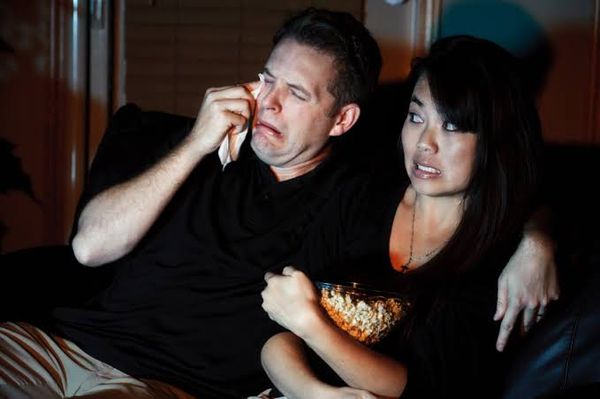
Why Women are Disgusted by Men Who Cry
“I just want a man who’s emotionally available.” He opens up. He cries. She loses attraction instantly — and can’t explain why. She asked for vulnerability. He gave it. And she punished him for it.

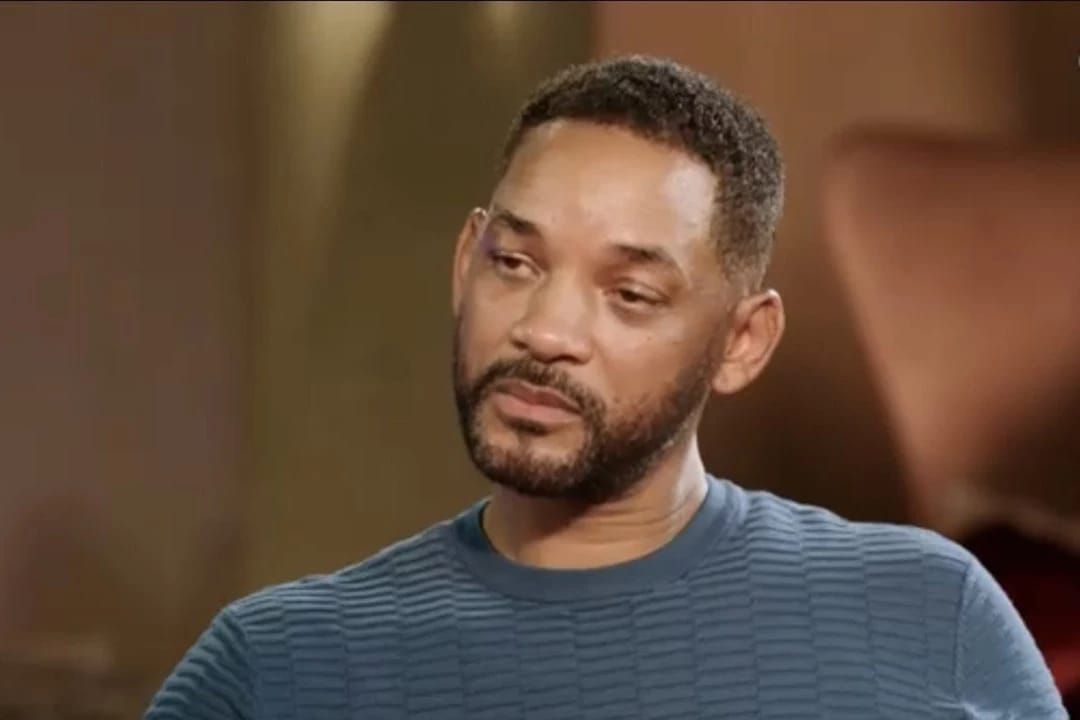
“I just want a man who’s emotionally available.” He opens up. He cries. She loses attraction instantly — and can’t explain why. She asked for vulnerability. He gave it. And she punished him for it.
She begged him to open up.
“You never share your feelings.” “I want to know what’s going on inside.” “It’s okay to be vulnerable with me.” “Real men aren’t afraid to cry.”
So he did. He cried. Maybe it was about his father. Maybe it was about his career falling apart. Maybe it was about how lonely he felt before he met her. He let the walls down — the ones he spent decades building — because she said it was safe.
And something shifted behind her eyes. Not compassion. Not connection. Something colder. Something she’d never admit to him, to her friends, or even to herself.
She lost respect for him.
Not immediately. Not obviously. But the way she looked at him changed. The way she touched him changed. The frequency shifted. The enthusiasm dimmed. The man she was attracted to before the tears became someone slightly different after them — someone she loved but no longer desired.
She asked for vulnerability. He delivered. And the delivery cost him the very thing that made her want him in the first place.
The Paradox Every Man Knows
This is the cruelest paradox in modern relationships — and every man who’s lived it knows it intuitively even if he can’t articulate it:
Women say they want emotional vulnerability from men. They do not.
What they want is controlled emotional depth — the ability to express feelings without losing composure. The man who gets misty-eyed at his daughter’s wedding is attractive. The man who sobs uncontrollably about his childhood trauma on the couch is not.
The difference isn’t the emotion. It’s the control. Controlled emotion signals strength with depth. Uncontrolled emotion signals weakness. And female attraction — no matter what the culture says — cannot survive the perception of male weakness.
This isn’t what women are taught to believe about themselves. Every podcast, every therapist, every Instagram infographic tells women that they want vulnerable men. And consciously, they do. But attraction doesn’t operate at the conscious level. It operates at the limbic level — the ancient brain that evaluates mates for survival fitness.
And the limbic brain reads male crying as weakness. Every time.
The Biological Explanation
Female attraction to male strength isn’t cultural conditioning. It’s evolutionary programming.
In ancestral environments, a woman’s survival depended on her partner’s strength. Not just physical strength — emotional resilience, composure under pressure, the ability to remain functional when circumstances were threatening. A man who collapsed emotionally during a crisis was a man who couldn’t protect her or her children. His tears weren’t endearing. They were a survival threat.
This programming doesn’t disappear because the environment changed. The woman living in a safe apartment in 2026 has the same limbic brain as the woman living on the savanna 100,000 years ago. When her partner cries, her conscious mind says “this is healthy and I should support him.” Her limbic brain says “this man is weak and I need to reassess.”
The limbic response wins. Not immediately — she’ll comfort him, hold him, tell him she’s glad he opened up. But the seed is planted. The perception of weakness takes root. And over the following weeks and months, her attraction erodes — not because of anything he does, but because of what she saw.
Testosterone and attraction are linked. Women are attracted to markers of high testosterone — deep voice, physical strength, confidence, assertiveness, emotional stoicism. Crying is a marker of low testosterone activation. When a man cries, he’s temporarily displaying the opposite of the hormonal profile that triggered her attraction. Her biology registers the display and adjusts her attraction accordingly.
This isn’t fair. It isn’t rational. It isn’t something she chooses. But it’s real — and pretending it isn’t doesn’t protect the men who suffer the consequences.
What Women Won’t Admit
The loss of attraction after male crying is one of the most aggressively denied realities in modern dating. Women will fight this article tooth and nail — because admitting it contradicts their self-image as emotionally enlightened partners who welcome male vulnerability.
“I would NEVER lose respect for a man who cries.” Maybe. But research on female mate preference consistently shows that emotional stability is one of the top traits women select for — ranking above kindness, humor, and physical attractiveness in long-term partner evaluation. Emotional stability and crying are functionally opposite signals.
“My boyfriend cried and I loved him more.” Possible in isolated instances — particularly when the crying is situational (grief, major loss) rather than dispositional (frequent emotional breakdowns). But the woman whose boyfriend cries regularly about stress, insecurity, or emotional overwhelm almost always reports declining attraction — she just doesn’t connect the two because the cultural narrative tells her she shouldn’t.
“That’s toxic masculinity talking.” No. It’s evolutionary biology talking. Labeling the observation “toxic” doesn’t make it untrue. It just prevents honest conversation about a dynamic that’s hurting men who were told vulnerability was safe — and discovered it wasn’t.
“Real women support vulnerable men.” Support and attraction are different things. She can support him emotionally while simultaneously losing attraction. Both can happen at the same time. And both do — regularly.
How Men Learn the Lesson
No man is born knowing that crying costs him attraction. He learns it — through experience, through pain, and through the slow realization that the cultural script he was given was a lie.
The first time. He opens up to a girlfriend. She holds him. She says all the right things. Over the next two weeks, she’s subtly different — less affectionate, less interested, less enthusiastic. He can’t pinpoint why. They break up a month later. She says “I just don’t feel the same way anymore.” He doesn’t connect it to the crying. Not yet.
The second time. Different woman. Same script. She asks for vulnerability. He provides it. The same subtle shift. The same distance. The same eventual ending. This time he notices the pattern — but dismisses it. “It can’t be that. She ASKED me to open up.”
The third time. He opens up less. Tests the waters with small disclosures. Watches her reaction carefully. Notes the micro-expressions — the flash of something uncomfortable when he shows weakness, the slight withdrawal after emotional conversations. The pattern is undeniable now.
The conclusion. He stops crying in front of women. Not because he doesn’t have emotions. Not because he’s suppressing trauma. Because he learned — through repeated painful experience — that male crying has a cost that nobody warned him about. And the cost is the thing he values most: her desire for him.
He processes his emotions with male friends, in solitude, at the gym, through action. He becomes what the culture calls “emotionally unavailable.” He’s not unavailable. He’s protecting himself from a vulnerability tax that the culture pretends doesn’t exist.
The Double Standard
The asymmetry is staggering.
She cries and he holds her. His attraction doesn’t diminish. If anything, it increases — her vulnerability triggers his protective instinct. Her tears make her seem softer, more feminine, more in need of his strength. Male attraction to female crying often goes UP.
He cries and she holds him. Her attraction diminishes. His vulnerability triggers her limbic reassessment. His tears make him seem weaker, less capable, less reliable as a protector. Female attraction to male crying almost always goes DOWN.
Same behavior. Opposite biological responses. And a culture that insists the responses should be identical — while biology demonstrates they never will be.
She’s allowed to cry at commercials, at movies, at songs, at arguments, at stress, at happiness. Her tears are always valid. Always supported. Always met with compassion and zero attraction consequences.
He’s allowed to cry at funerals. Maybe at his child’s birth. Maybe at a championship win. Any crying outside these narrow categories is risky — and the risk is paid in attraction, not support. She’ll support him through the tears. She just won’t want him the same way after.
What Men Should Actually Do
This isn’t an argument for emotional suppression. Men need to process emotions. Unprocessed emotion becomes anger, addiction, depression, and disconnection. The question isn’t whether to feel — it’s where and with whom to express those feelings safely.
Process with male friends. Men who have close male friendships can be vulnerable without attraction consequences. A man crying with his best friend strengthens the bond. A man crying with his girlfriend weakens the attraction. Know the difference. Use it.
Process through action. The gym. A long drive. A physical project. Men process emotion through movement and doing — not through verbal disclosure. This isn’t suppression. It’s a different processing pathway that works better for male psychology.
Process with a therapist. A professional who’s paid to hold your emotional weight without any relational consequence. No attraction to lose. No respect at stake. Just processing.
Be selectively vulnerable with her. Share feelings. Express depth. Show emotional intelligence. But maintain composure while doing it. “I’m going through a hard time with my dad” delivered with steady eye contact is vulnerability. The same sentence delivered through sobs is a different signal entirely. The content is the same. The delivery determines the cost.
Don’t believe the script. When she says “I want you to be vulnerable,” she means it — partially. She wants to KNOW you have depth. She doesn’t want to SEE you fall apart. The distinction is everything.
The Bottom Line
Women lose respect for men who cry because biology programmed them to equate male emotional composure with survival fitness — and no amount of cultural reprogramming has overridden the code.
This isn’t women’s fault. They don’t choose the response. They often don’t even recognize it’s happening. The loss of attraction is subtle, gradual, and rationalized as something else — “the spark faded,” “we grew apart,” “I just don’t feel it anymore.”
But the men who’ve lived it know exactly what happened. They opened up. She closed down. And the lesson was learned in the most painful way possible.
She asked for vulnerability. He gave it. She left.
The next woman who asks will get depth without collapse. Feeling without falling apart. Emotion without weakness.
Because he learned what the culture refused to teach him: the safest place for a man’s tears is anywhere she can’t see them.
Do women really lose respect for men who cry? Or is this outdated thinking? The comments are going to be intense on this one.