
Feminism Is a Rebellion Against Nature — And Women Are Paying the Price
Feminism told women to defy biology, reject traditional roles, and compete with men. Nature didn’t get the memo. Here’s why women who followed the feminist playbook are more medicated, more lonely, and more miserable than any generation before them.

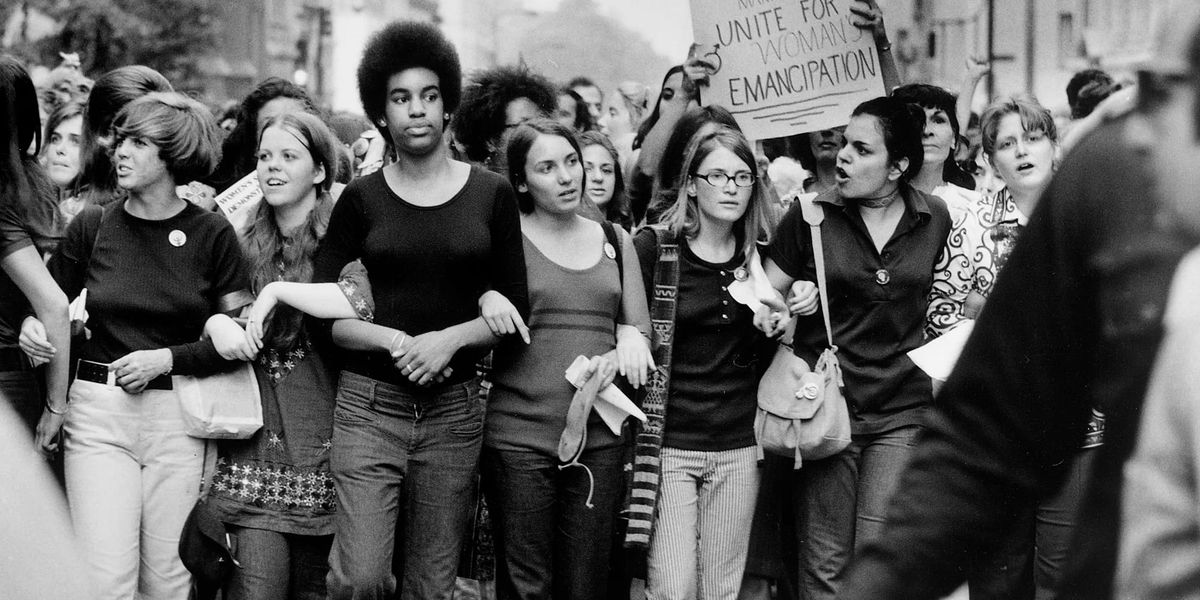
Feminism told women to defy biology, reject traditional roles, and compete with men. Nature didn’t get the memo. Here’s why women who followed the feminist playbook are more medicated, more lonely, and more miserable than any generation before them.
Feminism was supposed to liberate women. Instead, it made them miserable.
That’s not a conservative talking point. It’s what the data says. Women’s self-reported happiness has declined steadily since the 1970s — the exact period when feminist ideology went mainstream. The more “liberated” women became, the less happy they reported being.
Researchers call it the “feminist paradox” — the finding that women’s happiness has decreased relative to men’s even as women gained more rights, more education, more career options, and more independence.
The explanation is simpler than anyone wants to admit: feminism asked women to defy their nature. And nature always wins.
The Happiness Decline Nobody Can Explain Away
A landmark study published in the American Economic Journal — titled “The Paradox of Declining Female Happiness” — documented that women’s subjective wellbeing declined both absolutely and relative to men from the 1970s through the 2000s. The trend held across demographics, age groups, and countries.
More education. More career options. More financial independence. More legal rights. More sexual freedom. And less happiness.
The feminist response is always the same: “We haven’t achieved true equality yet. Once we do, women will be happy.” But the data doesn’t support this. Countries with the highest gender equality scores — Scandinavian nations — show the same happiness decline among women. More equality didn’t produce more happiness. It produced more options and more anxiety about which options to choose.
The problem isn’t insufficient feminism. The problem is that feminism’s core prescription — reject traditional roles, compete in the male domain, prioritize career over family — runs directly counter to what most women’s biology and psychology are wired for.
What Nature Actually Designed Women For
This section is going to generate hate mail. But the science is clear.
Women’s biology is optimized for nurturing, bonding, and community building. This isn’t a patriarchal invention. It’s hormonal, neurological, and evolutionary.
Oxytocin and prolactin — the hormones most associated with bonding, nurturing, and caregiving — are present at significantly higher levels in women than men. These hormones drive women toward connection, empathy, and relational investment. They’re the reason women are overrepresented in nursing, teaching, social work, and counseling — not because of cultural pressure, but because those roles align with their neurochemical wiring.
Estrogen promotes social bonding, emotional processing, and verbal communication. Women’s brains have more neural connections between the emotional and verbal centers — which is why women process emotions through conversation and relationships more than men do.
The maternal instinct isn’t a social construct. Brain imaging studies show that women’s brains light up in response to infant cues — crying, cooing, facial expressions — in ways that men’s brains simply don’t replicate at the same intensity. This response is present even in women who haven’t had children, suggesting it’s hardwired rather than learned.
None of this means women can’t do other things. Women can lead companies, argue cases, perform surgery, and run countries. But “can do” and “optimized for” are different questions. A fish can climb a tree. But judging the fish by its tree-climbing ability ignores what it was designed to do.
Feminism told women to climb the tree. Then wondered why they weren’t happy at the top.
Career Over Family: The Trade Nobody Warned About
The feminist playbook prioritized career over family. “Lean in.” “Break the glass ceiling.” “You can have it all.”
Here’s what “having it all” actually looks like for most women who followed the prescription:
Delayed or forgone motherhood. The average age of first-time mothers has climbed steadily — now over 30 in many major cities. Women who prioritized career through their 20s and early 30s often discover that fertility doesn’t wait for the corner office. IVF costs $15,000-$30,000 per cycle with no guarantee. Egg freezing is a technological hedge against a biological reality that feminism told women to ignore.
Career burnout without fulfillment. Studies consistently show that women report less career satisfaction than men at equivalent levels — particularly in high-pressure corporate environments. The corner office feminism promised as the pinnacle of female achievement turns out to feel hollow when there’s no one to come home to.
Antidepressant epidemic. Women are prescribed antidepressants at roughly twice the rate of men. The most medicated demographic in America is college-educated women aged 25-44 — precisely the demographic that most fully absorbed the feminist prescription. Correlation isn’t causation. But the pattern is hard to ignore.
Loneliness despite social connectivity. Career-focused women report high rates of loneliness despite having professional networks, social media followings, and active social calendars. Professional achievement doesn’t fill the bonding void that nurturing relationships were designed to fill.
The Biblical Framework: One Section, One Truth
Genesis 3:16 outlines the consequences of the Fall for women. Among them: a desire that conflicts with her designed role, and a tension with male authority that produces struggle rather than harmony.
Whether you read this as literal theology or ancient wisdom literature, the observation is remarkably consistent with what we see in 2026: women striving against the roles they were designed for, experiencing the struggle the text predicted, and finding that the striving produces pain rather than peace.
God confronted Adam after the Fall — not Eve. The accountability structure was clear: the man was responsible for the family unit. Feminism inverted this structure. Women took on the burden of provision, protection, and leadership that was designed for men — and men, relieved of their responsibility, disengaged.
The result? Women are exhausted from carrying roles they weren’t designed to carry. Men are purposeless from having their roles stripped away. And both genders are miserable — exactly as the text suggested would happen when the natural order was defied.
You don’t have to be religious to see the pattern. But it helps explain why every attempt to engineer gender equality produces more unhappiness rather than less. You’re not fighting patriarchy. You’re fighting nature. And nature is undefeated.
What Feminism Got Right — And Where It Went Wrong
Intellectual honesty requires acknowledging what feminism accomplished:
Voting rights. Necessary and overdue. No argument.
Legal protections. Equal pay legislation, workplace harassment protections, reproductive healthcare access. Important institutional changes that corrected genuine injustices.
Educational access. Women can now pursue any field of study. This expanded human potential and was unequivocally positive.
Professional opportunity. Women can compete for any job, hold any position, and build any career. Removing artificial barriers was correct.
Where feminism went catastrophically wrong was in the prescription that followed the liberation. Instead of saying “women now have the freedom to choose career, family, or both,” feminism said “women should choose career, and choosing family is settling.”
The movement that was supposed to give women more choices ended up shaming them for choosing traditionally. A woman who wants to be a stay-at-home mother is “wasting her potential.” A woman who prioritizes her husband’s career is “submissive.” A woman who chooses family over the corner office is “not ambitious enough.”
Feminism didn’t expand choice. It replaced one set of expectations with another — and punished women who didn’t comply.
The Women Who Opted Out Are Thriving
Here’s the data feminism doesn’t want you to see:
Married mothers report higher life satisfaction than single career women. Multiple studies confirm that women in committed partnerships with children report higher subjective wellbeing than their single, child-free peers — even when controlling for income.
Traditional women report lower anxiety and depression. Women who embrace complementary gender roles — where the man leads and provides while the woman nurtures and manages the home — report lower rates of mental health issues than women in egalitarian or role-reversed relationships.
Religious women report higher happiness. Women who are part of faith communities and embrace traditional gender frameworks consistently report higher life satisfaction, stronger social bonds, and better mental health outcomes.
The women who rejected the feminist prescription — who married, had children, built homes, invested in community, and embraced their nurturing nature — are quietly living the lives that career-focused feminists told them were beneath them.
They’re not on LinkedIn posting about their promotions. They’re not on TikTok performing independence. They’re at home, raising families, building communities, and reporting higher happiness than the women who “have it all.”
The Uncomfortable Conclusion
Feminism is a rebellion against nature. And like all rebellions against nature, it produces casualties.
The casualties are the women who believed the career would fulfill them — and discovered it didn’t. Who believed body count doesn’t matter — and discovered it does. Who believed they didn’t need men — and discovered they’re lonely. Who believed motherhood could wait — and discovered biology doesn’t negotiate.
Nature designed women for connection, nurturing, and community. Feminism told them to pursue competition, independence, and career dominance. The women who listened are more medicated, more anxious, more lonely, and less happy than any generation of women before them.
That’s not empowerment. That’s a failed experiment with 50 years of data confirming the results.
The women who are thriving in 2026 aren’t the ones who followed the feminist playbook. They’re the ones who listened to their nature — and built lives that align with what they were actually designed for.
Nature doesn’t care about ideology. It cares about alignment. And the women who aligned with their design are the ones sleeping peacefully.
Is feminism empowering women or making them miserable? Has the movement gone too far? Drop your take in the comments — this one’s going to be a war zone.